Brand Name

Neupro

Generic Name
Rotigotine
View Brand Information
FDA approval date: April 02, 2012
Classification: Nonergot Dopamine Agonist
Form: Patch, Kit

What is Neupro (Rotigotine)?

NEUPRO is a dopamine agonist indicated for the treatment of: Parkinson's disease.
Save this treatment for later
Sign Up
Not sure about your diagnosis?
Check Your Symptoms
Tired of the same old research?
Check Latest Advances

Related Clinical Trials

Phase 2a Double-Blind Placebo-Controlled Trial of Transdermal Rotigotine as Adjunct to Behavioral Therapy for Cocaine Use Disorder

Summary: This is a randomized, double-blind, placebo-controlled phase 2b pilot clinical trial to determine whether non-ergoline D3/D2/D1 dopamine (DA) receptor agonist rotigotine (RTG), in combination with treatment as usual, including individual or group behavioral therapy can a) reduce cocaine use and also b) increase brain activity in frontocortical areas of the brain, and, as a reflection of that - imp...

Gene Expression Changes on Extended Use of Dopamine Agonists in Restless Legs Syndrome (RLS)

Summary: The study aims to observe changes in dopaminergic genes expression in peripheral tissue upon prolonged dopamine agonist treatment on patients with Restless Legs Syndrome (RLS). Similar studies in Parkinson's disease have shown changes in alpha-synuclein expression, which might offer insights into the dopaminergic gene regulation seen in RLS. The dopamine agonist drugs to be included in this study ...

Effects of Dopaminergic Therapy in Patients with Alzheimer's Disease: a 24 Weeks Prospective, Randomized, Double-blind, Placebo-controlled, Parallel Group, International, Multi-center Phase III Study Evaluating Efficacy and Safety of Rotigotine 4 Mg/24 Hrs in Combination with Rivastigmine 9.5 Mg/24 Hrs in Mild to Moderate Alzheimer's Disease Patients.

Summary: This is a 24-week prospective, randomized, double-blind, placebo-controlled, multi-center phase III study evaluating efficacy and safety of rotigotine 4mg/24 hrs in combination with rivastigmine 9.5 mg/24 hrs in mild to moderate AD patients. The total study duration per patient from baseline to the end will be 24 weeks. The study has a placebo-controlled design to eliminate experimental biases tha...

Brand Information

Neupro (rotigotine)
1DOSAGE FORMS AND STRENGTHS
Transdermal System: 1 mg/24 hours, 2 mg/24 hours, 3 mg/24 hours, 4 mg/24 hours, 6 mg/24 hours, and 8 mg/24 hours of rotigotine.
2CONTRAINDICATIONS
NEUPRO is contraindicated in patients who have demonstrated hypersensitivity to rotigotine or the components of the transdermal system.
3ADVERSE REACTIONS
The following serious adverse reactions are discussed below and elsewhere in the labeling:
  • Sulfite Sensitivity
  • Falling Asleep During Activities of Daily Living and Somnolence
  • Hallucinations/Psychosis
  • Symptomatic Hypotension
  • Syncope
  • Impulse Control/Compulsive Behaviors
  • Elevation of Blood Pressure and Heart Rate
  • Weight Gain and Fluid Retention
  • Dyskinesia
  • Application Site Reactions
  • Augmentation and Rebound in RLS
  • Hyperpyrexia and Confusion
  • Withdrawal Symptoms
  • Fibrotic Complications
3.1Clinical Trials Experience
Because clinical trials are conducted under widely varying conditions, the incidence of adverse reactions (number of unique patients experiencing an adverse reaction associated with treatment/total number of patients treated) observed in the clinical trials of a drug cannot be directly compared to incidence of adverse reactions in the clinical trials of another drug and may not reflect the incidence of adverse reactions observed in practice.
3.2Laboratory Changes
Some clinical laboratory analytes were abnormal in patients treated with the maximum recommended NEUPRO dose in the fixed-dose, placebo-controlled, dose-response trials for patients with early- and advanced-stage Parkinson's disease and with RLS.
Patients with early-stage Parkinson's disease receiving NEUPRO had an increased risk for low hemoglobin below the normal reference range (NEUPRO 8% vs. placebo 2%) and for decreased hematocrit below the normal reference range (NEUPRO 8% vs. placebo 5%). Patients with advanced-stage Parkinson's disease receiving NEUPRO had an increased risk for a low hemoglobin below the normal reference range (NEUPRO 15% vs. placebo 11%) and for decreased hematocrit below the normal reference range (NEUPRO 17% vs. placebo 14%). Patients with RLS receiving NEUPRO had an increased risk for a decreased hemoglobin below the normal reference range (NEUPRO 15% vs. placebo 12%). There was also an increased risk for markedly decreased hemoglobin and hematocrit (NEUPRO 2% vs. placebo 0%) in patients with advanced-stage Parkinson's disease receiving NEUPRO and for markedly decreased hematocrit (NEUPRO 1% vs. placebo 0%) in patients with RLS receiving NEUPRO.
Patients with early-stage Parkinson's disease receiving NEUPRO had an increased risk for elevated serum blood urea nitrogen (BUN) above the normal reference range (NEUPRO 11% vs. placebo 2%). There was also an increased risk for markedly elevated serum BUN (NEUPRO 3% vs. placebo 2%) in patients with advanced-stage Parkinson's disease receiving NEUPRO.
There was an increased risk for low serum glucose below the normal reference range in patients with early- stage Parkinson's disease receiving NEUPRO (NEUPRO 15% vs. placebo 6%) and in patients with advanced-stage Parkinson's disease (NEUPRO 10% vs. placebo 7%). There was also an increased risk for markedly decreased serum glucose (NEUPRO 1% vs. placebo 0%) in patients with advanced-stage Parkinson's disease receiving NEUPRO.
Serum creatine phosphokinase (CPK) was elevated in Japanese patients taking NEUPRO for early- or advanced-stage Parkinson's disease in placebo-controlled, flexible-dose studies conducted in Japan. The frequency of CPK elevation observed in patients receiving NEUPRO for early-stage Parkinson's disease was 40% (35/88) in the NEUPRO group compared to 17% (15/89) in the placebo group. The frequency of CPK elevation observed in patients receiving NEUPRO for advanced-stage Parkinson's disease was 39% (99/253) in the NEUPRO group compared to 20% (34/171) in the placebo group using pooled data from two studies.
Increased CPK occurred at any time during the respective studies, and in some instances increased CPK was observed at two or more consecutive visits. The total daily dose of NEUPRO taken by patients with early- and advanced-stage Parkinson's disease ranged between 2 mg/24 hours to 16 mg/24 hours. Studies of NEUPRO conducted outside of Japan did not include assessments of serum CPK in patients treated for Parkinson's disease
3.3Postmarketing Experience
The following adverse reaction has been identified during post-approval use of NEUPRO. Because these reactions are reported voluntarily from a population of uncertain size, it is not always possible to reliably estimate their frequency or establish a causal relationship to drug exposure.
General Disorders and Administration Site Conditions: withdrawal symptoms [see
Nervous System Disorders: Dropped head syndrome
Musculoskeletal and connective tissue disorders:Rhabdomyolysis
4DESCRIPTION
NEUPRO is a transdermal system that provides continuous delivery of rotigotine, a non-ergoline dopamine agonist, for 24 hours following application to intact skin.
NEUPRO is available in six strengths as shown in Table 4.
The chemical name of rotigotine is (6S)-6-{propyl[2-(2-thienyl)ethyl]amino}-5,6,7,8-tetrahydro-1-naphthalenol. The empirical formula is C
5HOW SUPPLIED/STORAGE AND HANDLING
Each transdermal system is packaged in a separate pouch.
Each strength is available in cartons of 30 transdermal systems.
6PATIENT COUNSELING INFORMATION
Advise the patient to read the FDA-approved patient labeling (Patient Information).
7PATIENT INFORMATION NEUPRO ®[NU pro] (rotigotine transdermal system)
If you have Parkinson's disease, read this side. If you have Restless Legs Syndrome (also known as Willis-Ekbom disease), read the other side.
Rx Only
What is NEUPRO?
NEUPRO is a prescription medicine used to treat Parkinson's disease (PD). NEUPRO is a patch worn on the skin.
It is not known if NEUPRO is safe and effective in children.
Who should not use NEUPRO?
Do notuse NEUPRO if you are allergic to rotigotine or any of the ingredients in NEUPRO. See the end of this leaflet for a complete list of ingredients in NEUPRO.
What should I tell my doctor before using NEUPRO?
Before you start using NEUPRO, tell your doctor if you:
  • have breathing problems including asthma.
  • have daytime sleepiness from a sleep disorder or have unexpected or unpredictable sleepiness or periods of sleep.
  • have mental problems such as schizophrenia, bipolar disorder, or psychosis.
  • feel dizzy, nauseated, sweaty, or faint when you stand up from sitting or lying down.
  • drink alcoholic beverages. This may increase your chances of becoming drowsy or sleepy while using NEUPRO.
  • have high or low blood pressure.
  • have or have had heart problems.
  • are pregnant or plan to become pregnant. It is not known if NEUPRO will harm your unborn baby.
  • are breastfeeding or plan to breastfeed. It is not known if NEUPRO passes into your breastmilk. The amount of breast milk you make may be decreased while taking NEUPRO. Talk to your doctor about the best way to feed your baby if you take NEUPRO.
Tell your doctor about all the medicines you take,including prescription and over-the-counter medicines, vitamins, and herbal supplements.
NEUPRO and other medicines may affect each other causing side effects. NEUPRO may affect the way other medicines work, and other medicines may affect how NEUPRO works.
Especially tell your doctor if you take other medicines that can make you sleepy such as sleep medicines, antidepressants, or antipsychotics.
Know the medicines you take. Keep a list of them to show your doctor and pharmacist when you get a new medicine.
How should I use NEUPRO for Parkinson's disease?
  • Read the Instructions for Use at the end of this leaflet for specific information about the right way to apply the NEUPRO patch.
  • Use NEUPRO exactly as your doctor tells you to use it.
  • NEUPRO comes in 4 different size (dose) patches for Parkinson's disease. Your doctor should start you on a low dose of NEUPRO. Your doctor will change the dose weekly until you are taking the right amount of medicine to control your symptoms. It may take several weeks before you reach the dose that controls your symptoms best.
  • Apply NEUPRO 1 time each day at the same time each day.
  • You may bathe, shower, or swim while wearing a NEUPRO patch. Water may loosen your NEUPRO patch.
  • If the edges of the patch lift, you may tape them down with bandaging tape.
  • If your NEUPRO patch falls off, apply a new NEUPRO patch for the rest of the day. The next day, apply a new patch at your regular time.
  • If you miss a dose or forget to change your NEUPRO patch, apply a new NEUPRO patch as soon as you remember. Replace the NEUPRO patch at your normal time the next day.
  • Do notstop using NEUPRO without talking to your doctor first. If your doctor tells you to stop using NEUPRO, you should ask your doctor for specific instructions on how to slowly and safely discontinue using NEUPRO. If you stop using NEUPRO, you may have withdrawal symptoms (see " ).
What should I avoid while using NEUPRO?
  • Do notdrive, operate machinery, or do other dangerous activities until you know how NEUPRO affects you.
  • Avoid exposing the site where you have applied your NEUPRO patch to heating pads, electric blankets, heat lamps, saunas, hot tubs, heated water beds, and direct sunlight. Too much medicine could be absorbed into your body.
  • Do notuse NEUPRO during certain medical procedures called magnetic resonance imaging (MRI) or cardioversion. Using NEUPRO during these procedures could cause a burn to the site where you applied your NEUPRO patch.
  • Avoid direct sunlight if you get a skin rash or irritation from NEUPRO until your skin heals. Sun exposure could lead to skin color changes.
What are the possible side effects of NEUPRO?
NEUPRO can cause serious side effects, including:
  • severe allergic reactions.NEUPRO contains a sulfite called sodium metabisulfite. Sulfites can cause severe allergic reactions that are life threatening to some people who are sensitive to sulfites. An allergy to sulfites is not the same as an allergy to sulfa. People with asthma are more likely to be allergic to sulfites. Remove your NEUPRO patch right away and call your doctor if you have swelling of the lips or tongue, chest pain, trouble breathing or swallowing.
  • falling asleep during normal activities.You may fall asleep while doing normal activities such as driving a car, doing physical tasks, or using hazardous machinery while taking NEUPRO. You may suddenly fall asleep without being drowsy or without warning. This may result in having accidents. Your chances of falling asleep while doing normal activities while using NEUPRO are greater if you take other medicines that cause drowsiness. Tell your doctor right away if this happens. Before starting NEUPRO, be sure to tell your doctor if you take any medicines that make you drowsy.
  • hallucinations and other psychosis.NEUPRO can cause or worsen psychotic symptoms including hallucinations (seeing or hearing things that are not real), confusion, excessive suspicion, aggressive behavior, agitation, delusional beliefs (believing things that are not real), and disorganized thinking. The chances of having hallucinations or these other psychotic-like changes are higher in people with Parkinson's disease who are elderly, taking NEUPRO, or taking higher doses of NEUPRO. If you have hallucinations or any of these other psychotic-like changes, talk with your doctor.
  • changes in blood pressure.NEUPRO can decrease or increase your blood pressure. Lowering of your blood pressure is of special concern. If you faint or feel dizzy, nauseated, or sweaty when you stand up from sitting or lying down, this may mean that your blood pressure is decreased. If you notice this, you should contact your doctor. Also, when changing position from lying down or sitting to standing up, you should do it carefully and slowly. Lowering of your blood pressure can happen, especially when you start taking NEUPRO or when your dose is increased.
  • fainting.Fainting can occur, and sometimes your heart rate may be decreased. This can happen especially when you start using NEUPRO or your dose is increased. Tell your doctor if you faint or feel dizzy.
  • unusual urges.Some patients using NEUPRO get urges to behave in a way unusual for them. Examples of this are an unusual urge to gamble, strong urges to spend money, binge eating, or increased sexual urges and behaviors. Some patients may want to use more NEUPRO than prescribed for their symptoms (dopamine dysregulation syndrome). If you notice or your family notices that you are developing any unusual behaviors, talk to your doctor.
  • changes in heart rate. NEUPRO can increase your heart rate.
  • increased weight and fluid retentioncan occur in patients using NEUPRO. NEUPRO can cause your body to keep extra fluid which leads to swelling and weight gain. Tell your doctor if you have swelling or fluid retention, especially in the ankles or legs, or have an unusually fast increase in weight.
  • uncontrolled, sudden movements.NEUPRO may cause uncontrolled, sudden movements or make such movements you already have worse or more frequent. Tell your doctor if this happens. The doses of your anti-Parkinson's medicine may need to be changed.
  • skin site reactions.Skin reactions may occur at the site where you apply NEUPRO. Tell your doctor if you get a rash, redness, swelling, or itching that will not go away at the skin site where you have applied NEUPRO.
  • withdrawal symptoms.NEUPRO is a dopamine agonist medicine. Dopamine agonist medicines, including NEUPRO, can cause withdrawal symptoms as your dose is slowly lowered (tapered) or when treatment with NEUPRO is stopped. Tell your doctor right away if you get any of the following withdrawal symptoms:
  • fever
  • confusion
  • severe muscle stiffness
  • feeling like you do not care things you usually care about (apathy)
  • anxiety
  • depression
  • fatigue
  • insomnia
  • sweating
  • pain
The most common side effects of NEUPRO for Parkinson's disease are nausea, vomiting, sleepiness, application site reactions, dizziness, loss of appetite, difficulty falling asleep and staying asleep, increased sweating, vision problems, leg swelling, and uncontrolled, sudden movements of arms or legs.
Tell your doctor if you have any side effect that bothers you or that does not go away.
These are not all the possible side effects of NEUPRO. For more information, ask your doctor or pharmacist.
Call your doctor for medical advice about side effects. You may report side effects to FDA at 1-800-FDA-1088.
How should I store NEUPRO?
  • Store NEUPRO at 68°F to 77°F (20°C to 25°C).
  • Store NEUPRO in its original sealed pouch until use.
Keep NEUPRO and all medicines out of reach of children and away from pets.
General information about the safe and effective use of NEUPRO.
Medicines are sometimes prescribed for purposes other than those listed in a Patient Information leaflet. Do not use NEUPRO for a condition for which it was not prescribed. Do not give NEUPRO to other people even if they have the same symptoms you have. It may harm them.
This Patient Information leaflet summarizes the most important information about NEUPRO. If you would like more information, talk with your doctor. You can ask your pharmacist or doctor for information about NEUPRO that was written for health professionals.
For more information, go to www.neupro.com or call 1-844-599-2273.
What are the ingredients in NEUPRO?
Active ingredient:rotigotine
Inactive ingredients:ascorbyl palmitate, povidone, silicone adhesive, sodium metabisulfite, and dl-alpha-tocopherol.
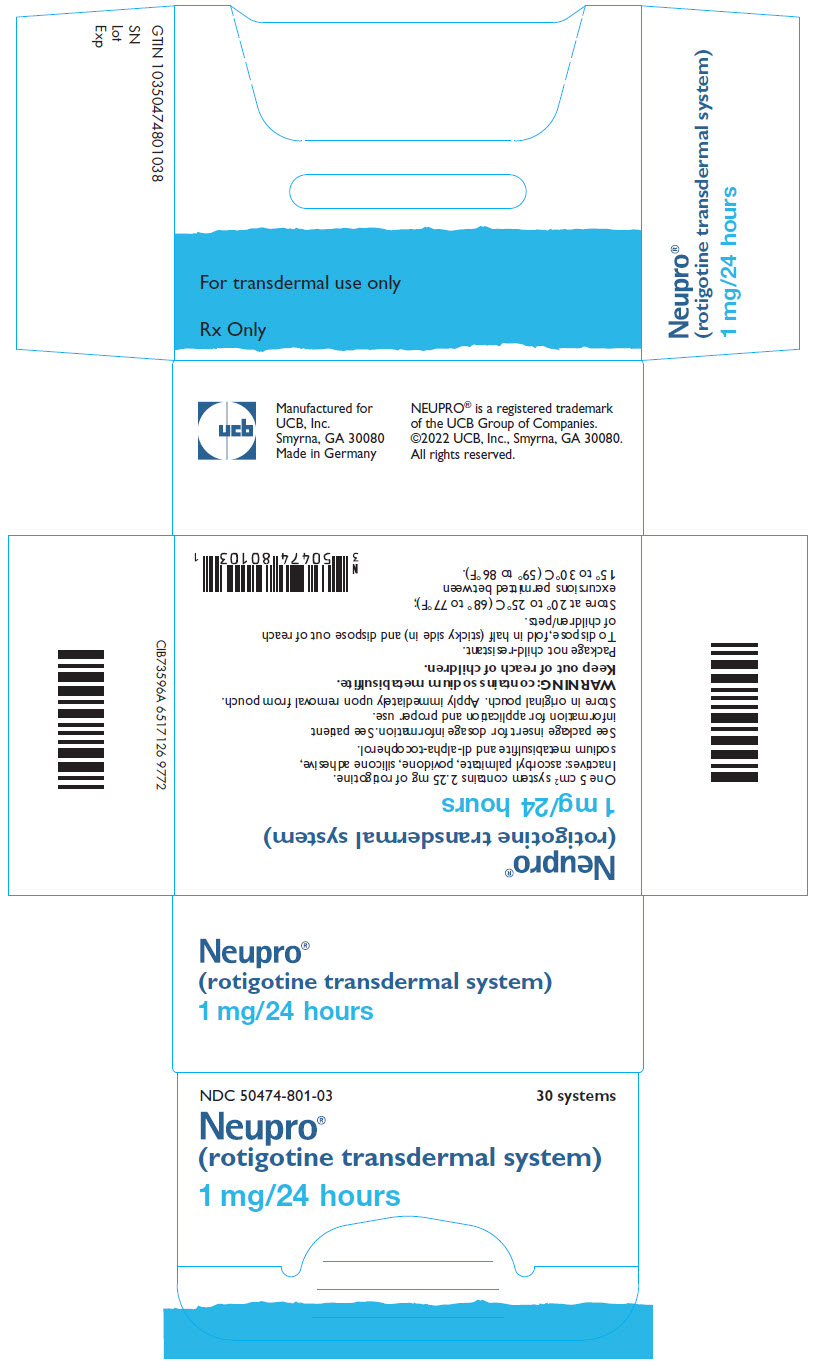
8PRINCIPAL DISPLAY PANEL - 1 mg Patch Pouch Carton
NDC 50474-801-03
Neupro
For transdermal use only
Rx Only
PRINCIPAL DISPLAY PANEL - 1 mg Patch Pouch Carton
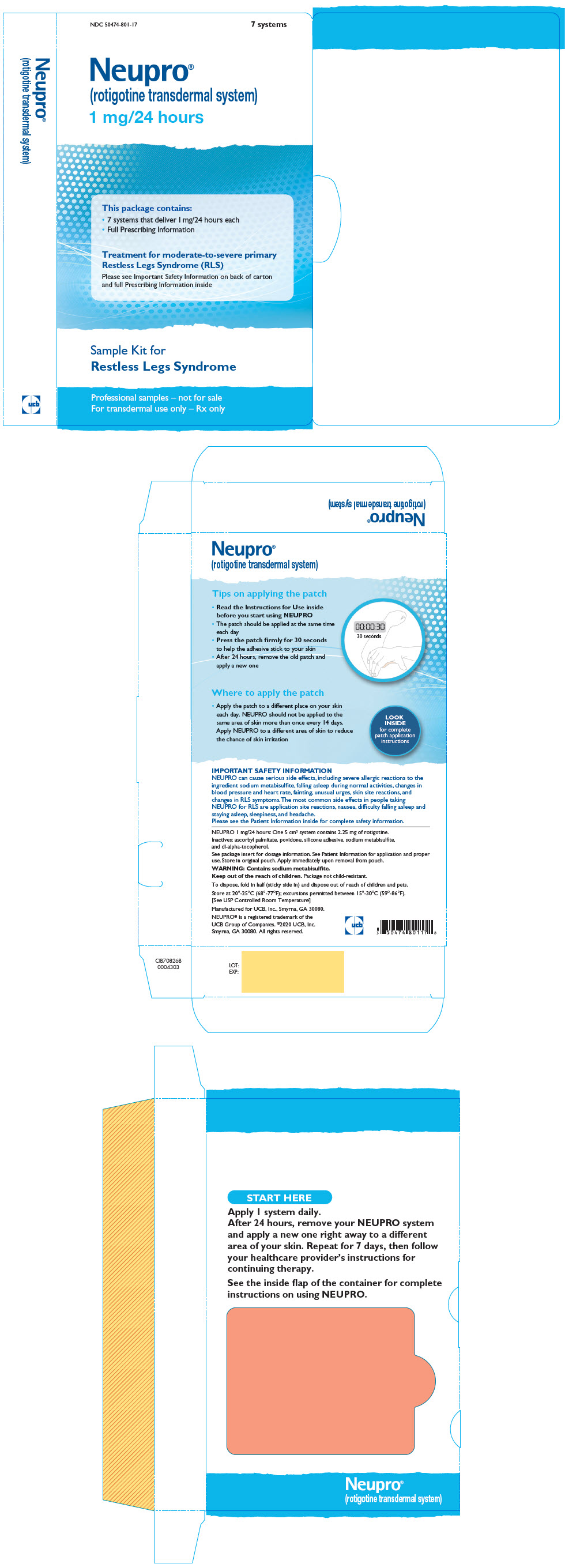
9PRINCIPAL DISPLAY PANEL - 1 mg Patch Pouch Carton - NDC 50474-801-17
NDC 50474-801-17
Neupro
1 mg/24 hours
This package contains:
  • 7 systems that deliver 1 mg/24 hours each
  • Full Prescribing Information
Treatment for moderate-to-severe primary
Please see Important Safety Information on back of carton
Sample Kit for
Professional samples – not for sale
PRINCIPAL DISPLAY PANEL - 1 mg Patch Pouch Carton - NDC 50474-801-17
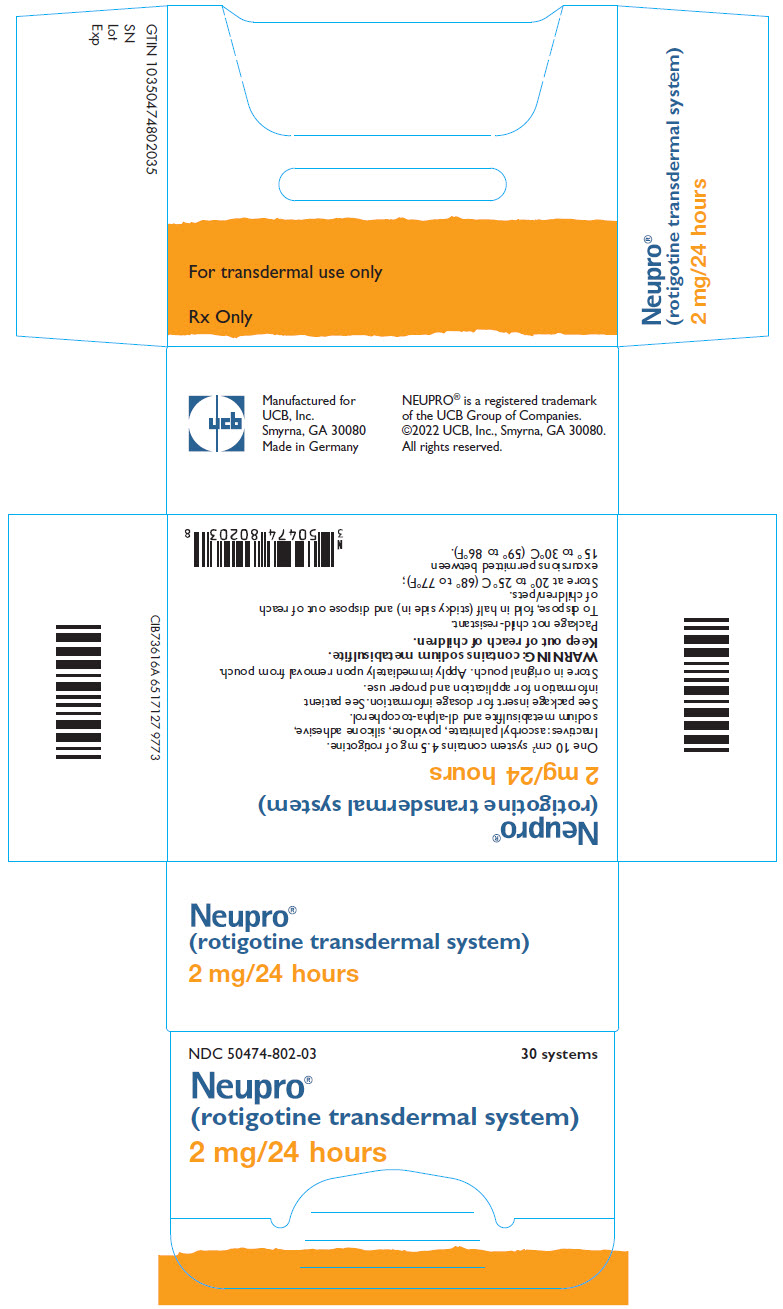
10PRINCIPAL DISPLAY PANEL - 2 mg Patch Pouch Carton
NDC 50474-802-03
Neupro
For transdermal use only
Rx Only
PRINCIPAL DISPLAY PANEL - 2 mg Patch Pouch Carton
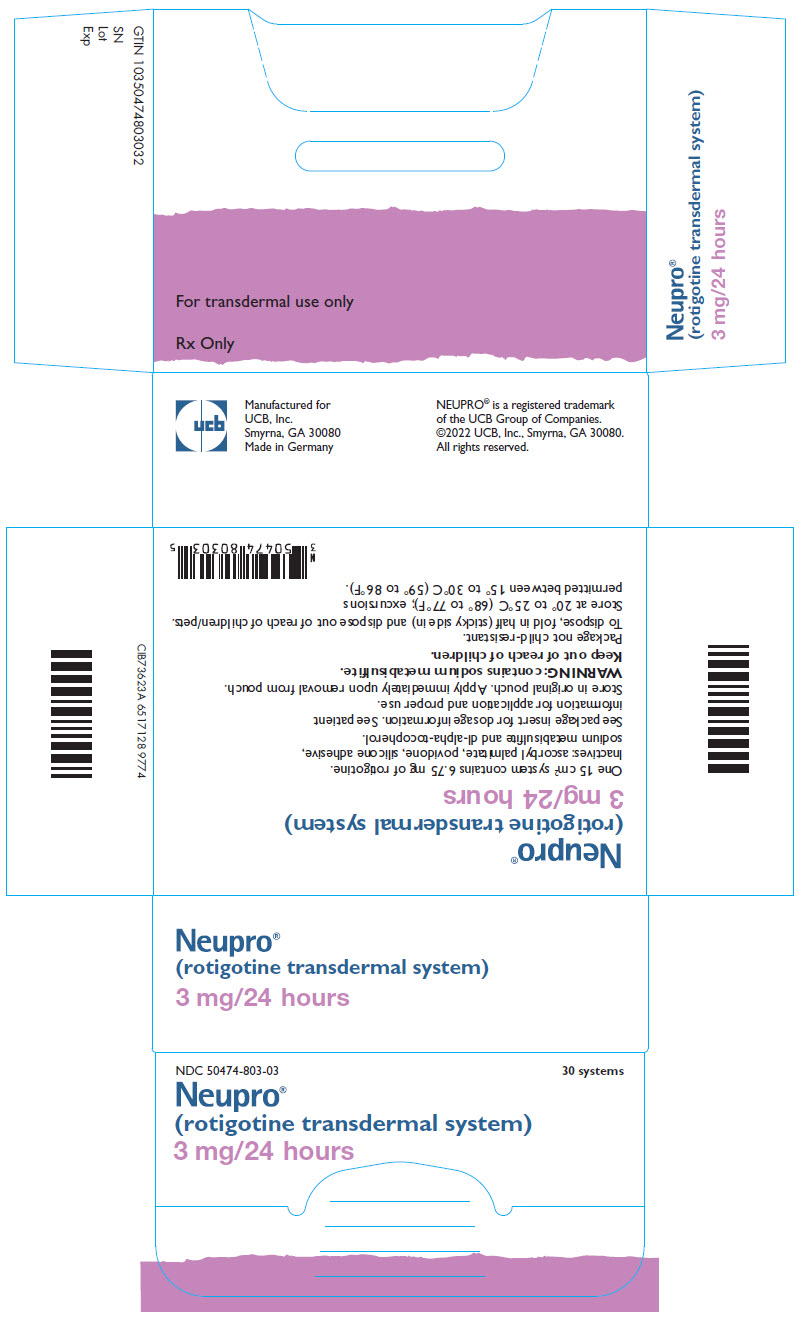
11PRINCIPAL DISPLAY PANEL - 3 mg Patch Pouch Carton
NDC 50474-803-03
Neupro
For transdermal use only
Rx Only
PRINCIPAL DISPLAY PANEL - 3 mg Patch Pouch Carton
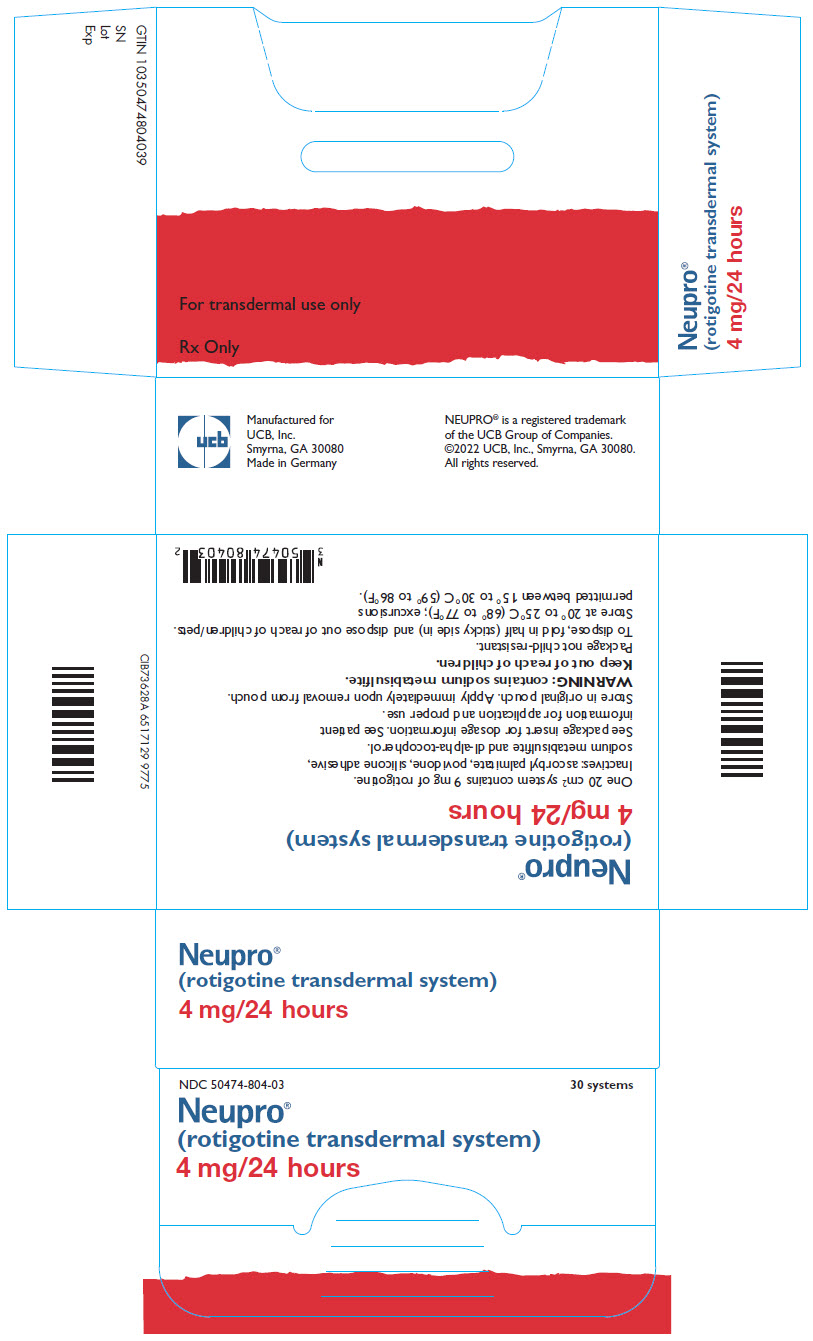
12PRINCIPAL DISPLAY PANEL - 4 mg Patch Pouch Carton
NDC 50474-804-03
Neupro
For transdermal use only
Rx Only
PRINCIPAL DISPLAY PANEL - 4 mg Patch Pouch Carton
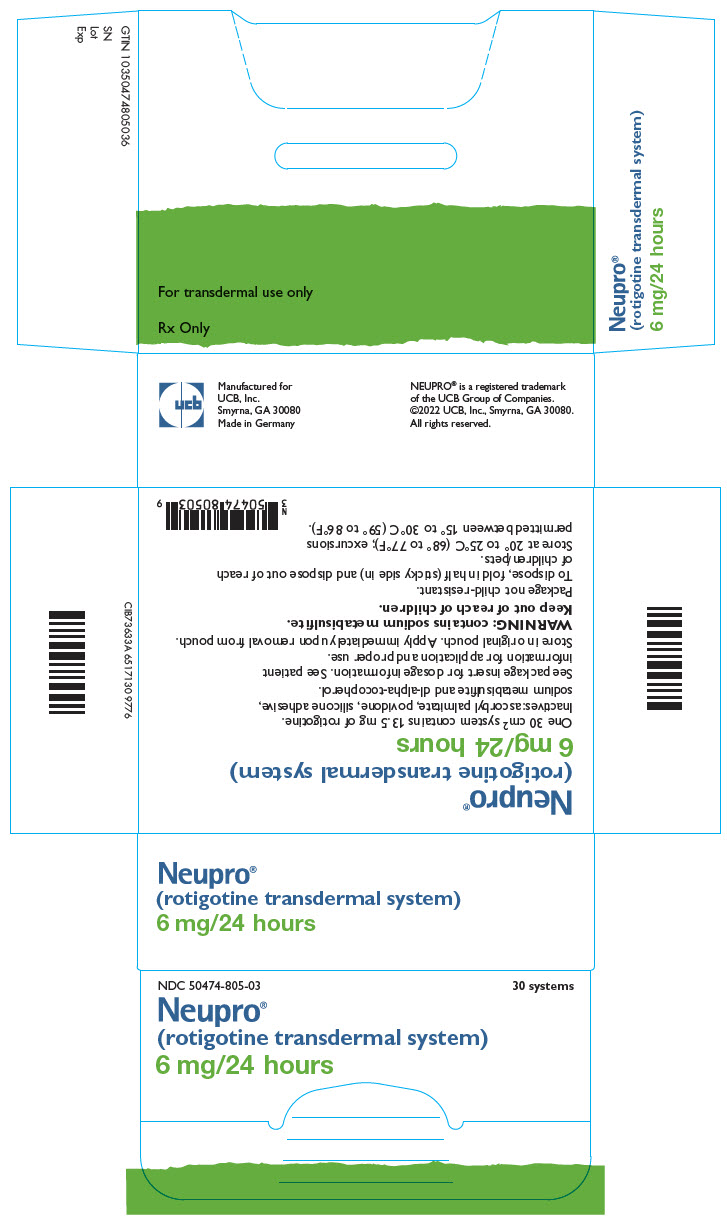
13PRINCIPAL DISPLAY PANEL - 6 mg Patch Pouch Carton
NDC 50474-805-03
Neupro
For transdermal use only
Rx Only
PRINCIPAL DISPLAY PANEL - 6 mg Patch Pouch Carton
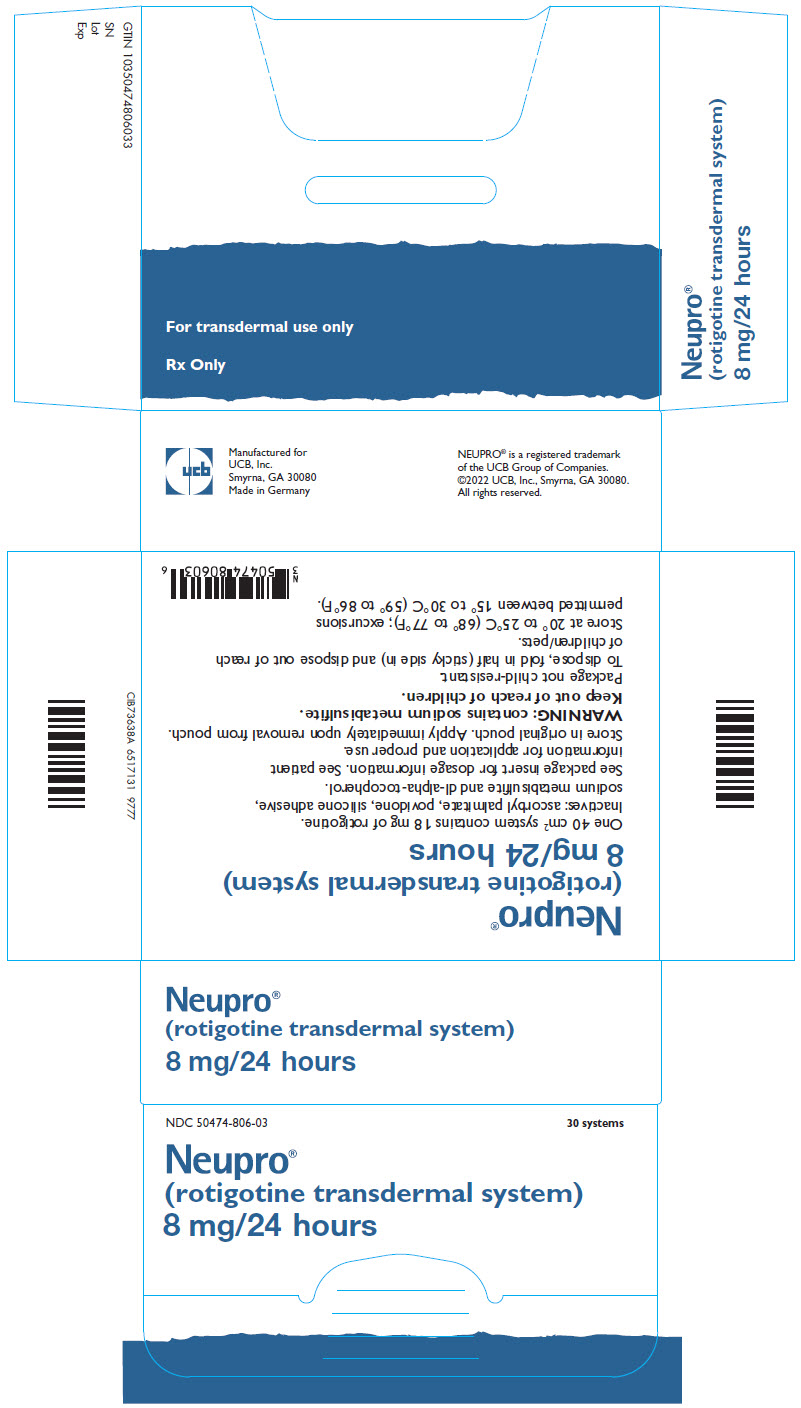
14PRINCIPAL DISPLAY PANEL - 8 mg Patch Pouch Carton
NDC 50474-806-03
Neupro
For transdermal use only
Rx Only
PRINCIPAL DISPLAY PANEL - 8 mg Patch Pouch Carton
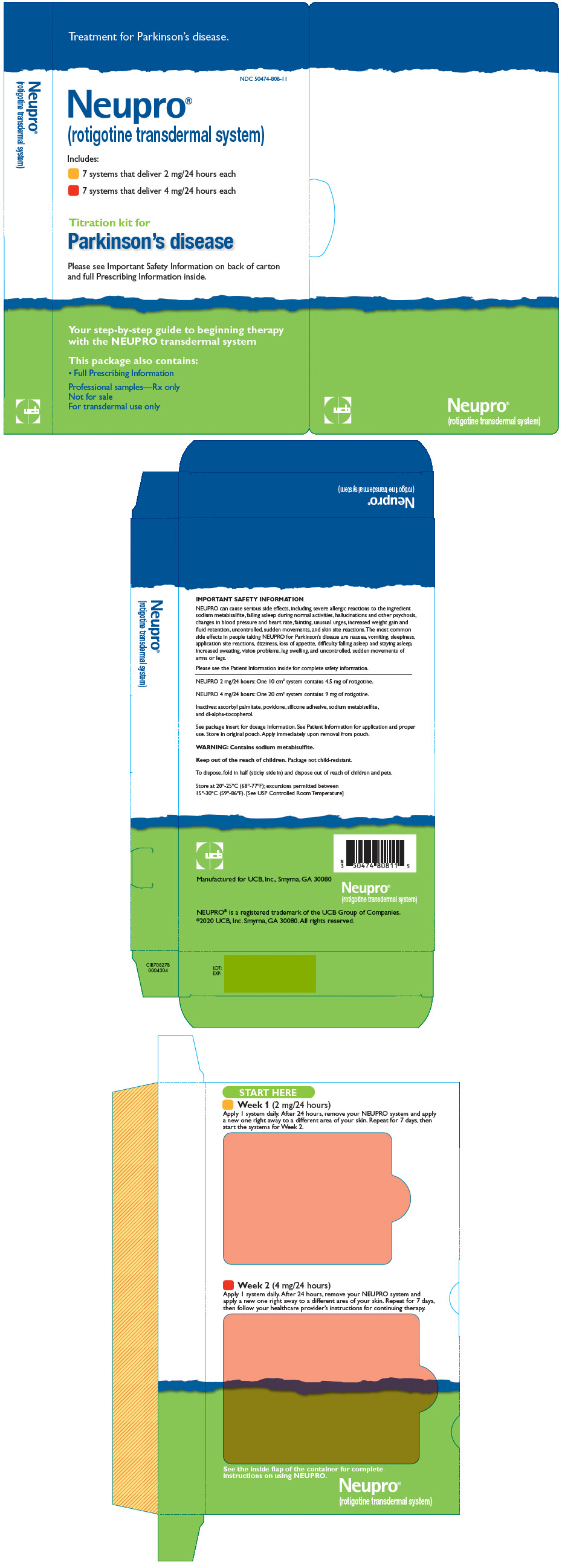
15PRINCIPAL DISPLAY PANEL - Kit Carton
Treatment for Parkinson's disease.
NDC 50474-808-11
Neupro
Includes:
  • 7 systems that deliver 2 mg/24 hours each
  • 7 systems that deliver 4 mg/24 hours each
Titration kit for
Please see Important Safety Information on back of carton
Your step-by-step guide to beginning therapy
This package also contains:
  • Full Prescribing Information
Professional samples—Rx only
PRINCIPAL DISPLAY PANEL - Kit Carton